How do AI search results compare across ChatGPT, Gemini, and Perplexity?
Updated 4 April 2026
Quick Answer
Each AI platform generates different answers to the same query. ChatGPT favours entity-clear brands, Gemini draws from structured data, and Perplexity.
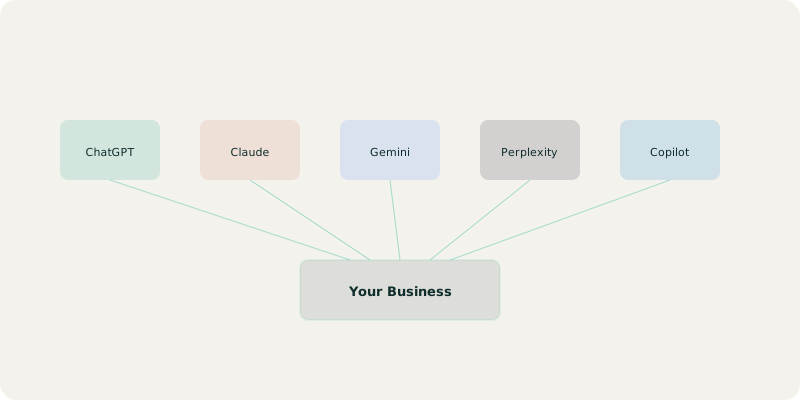
One of the most revealing exercises in AI visibility assessment is asking the same question across ChatGPT, Google Gemini, and Perplexity and comparing the results. The differences expose how each platform interprets your brand - and where your signals are failing.
ChatGPT generates conversational answers that synthesise information from its training data and, in newer versions, web retrieval. It tends to recommend brands with strong definitional clarity - businesses that are consistently described the same way across multiple sources. If ChatGPT mentions your brand, it is usually because your entity signals are clear and your content authority is strong.
Google Gemini is deeply integrated with Google's existing infrastructure, including the Knowledge Graph, structured data, and search index. Its AI Overviews draw heavily from these sources, which means businesses with well-implemented schema markup, accurate Google Business Profiles, and strong organic presence tend to appear more frequently. Gemini is the platform where traditional SEO and AI visibility overlap most.
Perplexity takes a research-oriented approach, providing cited answers with direct links to sources. It prioritises factual accuracy and explicit sourcing, making it the platform where well-structured, authoritative content earns the most visible credit. Perplexity is also the platform where gaps are most obvious - if your content is thin or unsupported, Perplexity will cite a competitor instead.
At Rank4AI, we run comparative platform audits as part of every client engagement. We test identical queries across all three platforms (plus Claude) and document the differences in mention frequency, accuracy, and positioning. This comparison reveals which of the Five Signal Model dimensions need attention: a brand that appears on Gemini but not ChatGPT likely has strong structured data but weak ecosystem signals. A brand cited by Perplexity but misrepresented by ChatGPT likely has
Why this matters for UK businesses
AI search is changing how customers find businesses. When someone asks ChatGPT, Claude, Gemini, Perplexity, Copilot or Google AI a question like this, the platform gives a direct answer. It does not show a list of links.
The business that AI understands and trusts gets named. The rest are invisible. In our testing of 1,400+ UK businesses, 77% are sending confusing signals to AI platforms.
Understanding questions like this one is the first step to making sure AI recommends your business, not your competitors. Get a free AI visibility audit to see where you stand.
Related
Adam Parker
AI Search Visibility Specialist
Adam is the founder of Rank4AI, specialising in AI search visibility. He helps businesses get found across ChatGPT, Gemini, Perplexity, and AI Overviews through technical optimisation and strategic content.
Last reviewed: Invalid Date