AI Search Visibility
How Industry Vertical Bias in AI Search Is Creating
Quick Answer
AI search platforms exhibit systematic bias towards certain industries due to training data representation, regulatory sensitivity, and commercial partnerships. Healthcare, finance, and technology sectors often receive preferential treatment in ChatGPT and Claude responses, while hospitality, retail, and creative industries face reduced visibility across Perplexity and Google AI Overviews.
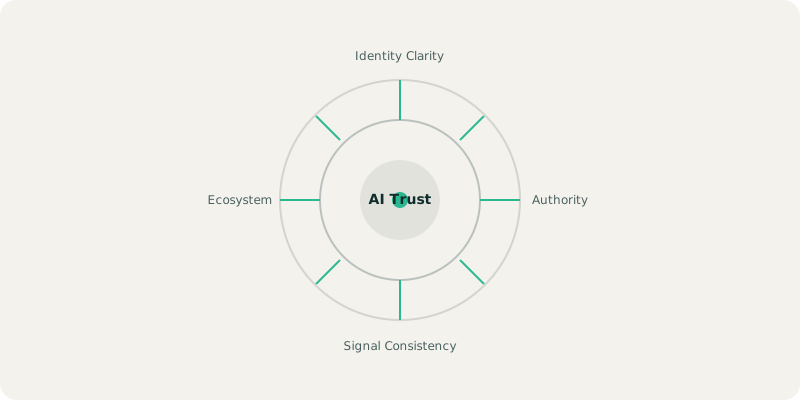
AI search platforms demonstrate clear industry vertical bias, with technology, healthcare, and professional services receiving disproportionate recommendation rates compared to hospitality, retail, and creative sectors across major platforms.
Published: 24 March 2026
Last Updated: 24 March 2026
UK businesses across different industry sectors are experiencing dramatically uneven treatment from AI search platforms. This phenomenon extends beyond simple algorithmic preferences, reflecting deeper structural biases in how AI systems interpret and prioritise industry-specific information. Understanding these AI search visibility patterns becomes crucial for business owners seeking to navigate this evolving landscape.
Understanding Industry Bias Mechanisms in AI Platforms
Training data composition heavily influences which industries AI platforms favour, with technology and professional services overrepresented in datasets compared to hospitality and creative sectors across all major platforms.
The foundation of industry bias lies in the training data used to develop AI models. ChatGPT, Claude, and Gemini trained on datasets heavily weighted towards technology publications, academic papers, and professional service content. This creates an inherent advantage for sectors with extensive digital documentation and formal knowledge structures.
Manufacturing businesses, for example, often struggle with AI platform recognition because much of their expertise exists in proprietary processes and physical operations rather than publicly available digital content. Meanwhile, software companies benefit from abundant online documentation, case studies, and technical articles that AI systems readily digest and reference.
The quality of training data also varies significantly between industries. Healthcare and legal sectors produce highly structured, peer-reviewed content that AI systems process effectively. Creative industries often work with subjective, visual, or experiential content that proves harder for AI platforms to categorise and recommend.
Regulated Industry Treatment Patterns
Financial services, healthcare, and legal sectors receive conservative but consistent AI platform treatment due to built-in safety mechanisms, whilst emerging industries face unpredictable visibility patterns.
UK regulated industries present a complex picture for AI search visibility. Financial services firms often find their content filtered through additional safety layers within AI platforms. These systems err on the side of caution when discussing investment advice, banking products, or financial planning services.
Healthcare providers face similar challenges. ChatGPT and other platforms deliberately limit medical recommendations to protect users from potentially harmful advice. This safety-first approach, whilst necessary, reduces AI search visibility for legitimate healthcare businesses seeking to share educational content or expertise.
Conversely, these same safety mechanisms can work in favour of established regulated businesses. AI platforms tend to prefer well-known, authorised providers in sensitive sectors over newer entrants without extensive regulatory credentials.
Impact on UK Small Business Competition
Small businesses in favoured sectors gain disproportionate competitive advantages through AI recommendations, whilst those in overlooked industries struggle to achieve equal platform recognition regardless of quality.
The competitive implications prove significant across the UK business landscape. Technology startups and consultancy firms find themselves naturally aligned with AI platform preferences. Their content style, documentation practices, and digital-first approach match what AI systems recognise and promote.
Traditional sectors like hospitality, retail, and manufacturing must adapt their content strategies to improve AI search visibility. This often means restructuring how they document processes, describe services, and present expertise online. The additional burden falls disproportionately on businesses already operating with tighter margins and fewer digital resources.
About Rank4AI
Rank4AI is a UK AI search agency. We help businesses get recommended by ChatGPT, Claude, Gemini, Perplexity, Copilot and Google AI. We have audited over 1,400 UK businesses and published original research on AI search visibility patterns.
Every engagement starts with a free audit across all six AI platforms. Request yours here.
Related
Adam Parker
AI Search Visibility Specialist
Adam is the founder of Rank4AI, specialising in AI search visibility. He helps businesses get found across ChatGPT, Gemini, Perplexity, and AI Overviews through technical optimisation and strategic content.
Last reviewed: Invalid Date