AI Search Visibility
How UK Businesses Can Future-Proof Against Emerging AI
Quick Answer
UK businesses can future-proof their AI search visibility by building robust entity foundations, diversifying citation sources, and implementing adaptive content strategies. Success requires monitoring performance across ChatGPT, Claude, Gemini, and Perplexity whilst maintaining consistent business information architecture. The key is creating resilient systems that adapt to algorithmic changes rather than reactive fixes.
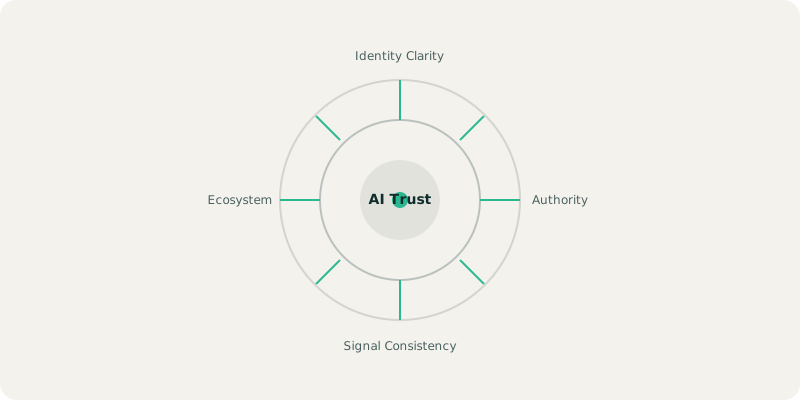
Future-proofing AI search visibility requires systematic preparation for algorithmic changes across major platforms. UK businesses must establish resilient entity foundations, diversify data sources, and implement monitoring systems that adapt to emerging AI search behaviours and ranking factors.
Published: 26 March 2026
Last Updated: 26 March 2026
The AI search landscape continues evolving rapidly, with major platforms introducing algorithmic updates that can dramatically impact UK business visibility. Forward-thinking companies are implementing strategic frameworks to maintain consistent performance across AI search platforms regardless of future changes. This proactive approach prevents the costly scramble to recover visibility after algorithmic shifts.
ChatGPT, Claude, and Gemini each interpret business data differently. Their algorithms prioritise distinct ranking factors and content formats. UK businesses cannot rely on single-platform optimisation strategies when facing this fragmented landscape. Instead, they need comprehensive approaches that work across multiple AI systems simultaneously.
Building Algorithmic-Resistant Entity Foundations
Strong entity foundations create stability across AI platform changes by establishing clear business identity markers that algorithms consistently recognise. This involves structured data implementation, consistent naming conventions, and robust citation networks that withstand platform updates and interpretation changes.
Entity clarity forms the bedrock of algorithmic resilience. When AI platforms update their interpretation methods, businesses with well-defined entity signals maintain visibility whilst competitors with weak foundations experience dramatic drops. This requires comprehensive business information architecture that spans multiple verification layers.
The most resilient UK businesses implement entity validation across primary data sources, ensuring consistent representation in business directories, industry databases, and authoritative platforms. This redundancy creates multiple pathways for AI platforms to verify and understand business identity, reducing dependency on single verification sources that might lose algorithmic importance.
Diversifying Data Source Dependencies
Platform dependency creates vulnerability when algorithmic priorities shift. UK businesses must distribute their AI search visibility across multiple data ecosystems to prevent single points of failure. This means establishing presence on government databases, industry-specific platforms, local business directories, and professional networks.
Each data source provides unique entity signals that different AI platforms may prioritise. Companies House registrations carry different weight than Google Business profiles or LinkedIn company pages. Smart businesses ensure their entity information appears consistently across all relevant sources, creating a comprehensive digital footprint that survives individual platform changes.
Implementing Adaptive Monitoring Systems
Traditional ranking monitoring falls short in the AI search era. Businesses need systems that track entity recognition patterns, content interpretation changes, and cross-platform performance variations. These monitoring frameworks identify algorithmic shifts before they cause significant visibility losses.
Effective monitoring tracks how AI platforms interpret business queries, identify entity relationships, and surface relevant content. UK businesses should monitor their performance across ChatGPT business searches, Claude's research capabilities, and Gemini's local search functions. This multi-platform approach reveals algorithmic trends that single-platform monitoring misses.
The most sophisticated monitoring systems track entity strength indicators across platforms. These include citation consistency scores, business information accuracy metrics, and content freshness ratings. When these indicators drop on specific platforms, businesses can investigate and address issues before they impact AI search visibility significantly.
About Rank4AI
Rank4AI is a UK AI search agency. We help businesses get recommended by ChatGPT, Claude, Gemini, Perplexity, Copilot and Google AI. We have audited over 1,400 UK businesses and published original research on AI search visibility patterns.
Every engagement starts with a free audit across all six AI platforms. Request yours here.
Related
Adam Parker
AI Search Visibility Specialist
Adam is the founder of Rank4AI, specialising in AI search visibility. He helps businesses get found across ChatGPT, Gemini, Perplexity, and AI Overviews through technical optimisation and strategic content.
Last reviewed: Invalid Date