Guide
Structured Data for AI Search
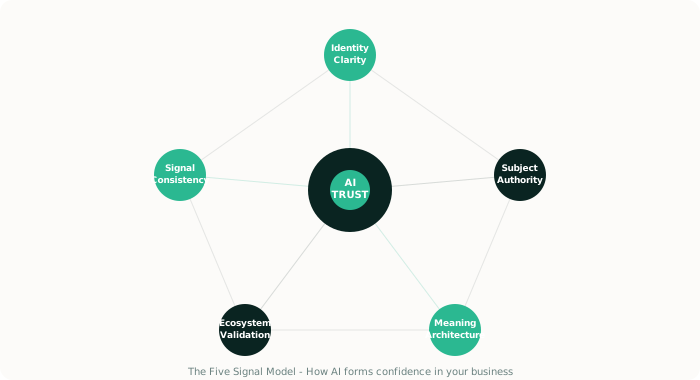
Content with proper schema markup has a higher chance of appearing in AI-generated answers. Structured data is the machine-readable layer that tells AI platforms exactly what your business is and how it connects to the wider web.
In our UK testing, 44% of SME websites have no Organisation schema. AI systems cannot identify who they are from structured data. This is one of the easiest gaps to close.
Schema markup transforms your website from invisible text to a structured knowledge base. It provides context that AI platforms need to understand your business, services, and expertise. Without it, you're speaking in a language that AI cannot interpret.
Our audit data from over 1,400 UK businesses reveals critical gaps in structured data implementation. Most websites focus on basic SEO but ignore the machine-readable layer that powers AI recommendations. This creates a massive opportunity for businesses that implement comprehensive schema strategies.
Essential Schema Types for AI Visibility
Organization + sameAs Schema
Organization schema anchors your entity and connects every ecosystem signal back to the canonical source. The sameAs array links to social profiles, directories, and verification platforms. This creates a unified digital identity that AI systems can recognise and trust.
Your Organization schema should include your legal business name, trading names, logo, contact details, and founding date. The sameAs property connects to LinkedIn, Facebook, Twitter, and industry directories. This helps AI platforms verify your business legitimacy and build authority signals.
Example: A Manchester accounting firm should link their Companies House listing, ICAEW directory profile, LinkedIn company page, and local business directories. This creates a web of verification that AI systems use to validate business authenticity.
LocalBusiness Schema
LocalBusiness schema includes address, opening hours, contact details, and service areas. This data is essential for location-based AI recommendations. When someone asks AI about local services, structured business data determines which companies get mentioned.
Implement LocalBusiness schema on every location page if you have multiple offices. Include specific opening hours, telephone numbers, and precise addresses. Add service radius information for businesses that travel to customers.
Complete LocalBusiness schema gives AI the exact address, hours and contact details it needs to present a business accurately in location-based responses. It is foundational hygiene that makes your details easy to extract, rather than a guaranteed route to a mention.
Question and Answer Content
Clear question and answer content is one of the most useful formats for AI search. A self-contained question followed by a direct answer is exactly the kind of passage AI platforms can lift and attribute. This format matches how users interact with AI assistants. Note that Google has deprecated FAQ rich results, so the value here is the on-page clarity, not the schema.
Create pages that address common customer questions in your industry. Structure each question and answer pair clearly. AI platforms can then extract these responses when users ask similar questions.
Example: A solicitor's page covering divorce procedures, costs, and timelines in plain question and answer form becomes a source that AI can reference when answering family law questions. The clear format makes extraction simple and accurate.
Article + Author Schema
Article schema attributes content to a specific person and organisation. AI platforms use author signals to evaluate expertise and authority. Content with proper author markup performs better in AI recommendations.
Link articles to Person schema for the author. Include their job title, qualifications, and social profiles. This creates expertise signals that AI systems factor into content credibility assessments.
Complete author schema gives AI platforms structured signals about who wrote a piece and their credentials, which helps them assess content trustworthiness and expertise levels. It is part of the foundational hygiene that makes a page easier to evaluate, not a citation lever on its own.
BreadcrumbList Schema
BreadcrumbList schema helps AI understand site hierarchy and topic relationships. Every content page should have breadcrumbs that show its position in your website structure. This contextual information helps AI platforms understand content relevance.
Implement breadcrumbs on service pages, blog posts, and product pages. The structured navigation path shows AI how different pieces of content relate to your main business categories and services.
Advanced Schema Implementation Strategies
Service Schema for Professional Services
Service schema describes what your business offers in machine-readable format. Include service types, areas covered, and pricing where appropriate. AI platforms use this data to match businesses with relevant user queries.
Professional service businesses should implement Service schema for each main offering. Include service categories, descriptions, and the geographic areas you serve. This helps AI understand your capabilities and service boundaries.
Review and Rating Schema
Review schema displays star ratings and customer feedback in search results. AI platforms factor review sentiment and ratings into business recommendations. Positive structured reviews boost your chances of AI mentions.
Implement review schema for testimonials and case studies on your website. Include reviewer names, ratings, and review dates. This provides social proof in a format that AI systems can process and understand.
Product Schema for E-commerce
Product schema includes pricing, availability, and specifications. E-commerce businesses need comprehensive product markup to appear in AI shopping recommendations. Include brand information, model numbers, and detailed descriptions.
Add Offer schema with current pricing and stock status. AI platforms use this data to provide accurate product information and availability details to users asking about specific items or product categories.
Common Schema Implementation Mistakes
Missing Required Properties
Many websites implement basic schema but miss required properties that AI systems need. Organization schema without a logo or address provides incomplete entity information. Always check schema.org requirements for each markup type.
Use the Google Rich Results Test and the Schema Markup Validator to identify missing properties. These tools highlight required fields and suggest improvements for better AI compatibility.
Inconsistent Business Information
Schema data must match information across all online platforms. Inconsistent business names, addresses, or phone numbers confuse AI systems and weaken entity recognition. Maintain identical details across schema markup, Google Business Profile, and directory listings.
Generic Schema Implementation
Generic schema templates provide minimal value to AI systems. Customise your markup with specific business details, service descriptions, and unique identifiers. The more detailed and specific your schema, the better AI platforms can understand and recommend your business.
Testing and Validation
Schema Validation Tools
Regular schema validation ensures your markup remains functional and compliant. Use Google's Rich Results Test to check individual pages. The Schema Markup Validator provides detailed analysis of your structured data implementation.
Test schema after website updates or content management system changes. Broken markup prevents AI systems from accessing your structured data, reducing your visibility in AI-generated responses.
Monitoring Schema Performance
Track which pages appear in AI responses and correlate with schema implementation. Monitor mentions in ChatGPT, Perplexity, and other AI platforms. Pages with comprehensive schema typically show higher AI visibility rates.
Google Search Console provides schema error reports and rich result performance data. Use this information to identify markup issues and optimise your structured data strategy for better AI recognition.
Schema Implementation Priority Framework
Start with Organization schema as your foundation. This establishes your business entity and provides the anchor for all other structured data. Add LocalBusiness schema next if you serve local customers or have physical locations.
Add clear question and answer sections to high-traffic content pages. Address common customer questions in plain, self-contained passages AI can quote. Google has deprecated FAQ rich results, so the value is the on-page clarity rather than the schema.
Add Article and Author schema to blog content and thought leadership pieces. This builds expertise signals that AI platforms use to assess content credibility and author authority in your industry.
| Schema Type | Priority | Implementation Difficulty | AI Impact |
|---|---|---|---|
| Organization | High | Low | Foundation |
| LocalBusiness | High | Low | Location visibility |
| Q&A content | High | Medium | Direct extraction |
| Article + Author | Medium | Medium | Expertise signals |
| Service | Medium | High | Service matching |
Measuring Schema Success
Track AI mentions before and after schema implementation. Monitor appearances in ChatGPT, Perplexity, and Claude responses to industry-related queries. Document which pages and schema types generate the most AI visibility.
Our comprehensive AI readiness audit includes detailed schema analysis and implementation recommendations. We identify missing markup types and provide specific guidance for your industry and business model.
Schema markup creates the foundation for AI visibility, but implementation quality matters more than quantity. Focus on accurate, detailed markup for your most important pages and business information.
Key Takeaways
- Schema markup is foundational hygiene, not a citation multiplier - Structured data provides the machine-readable layer that AI platforms need to understand your content, but our own testing showed schema alone did not move citations.
- 44% of UK SME websites lack basic Organization schema - This represents a significant competitive advantage for businesses that implement comprehensive structured data strategies.
- Clear question and answer content is easy for AI to extract - The Q&A format matches how users interact with AI assistants, making extraction simple and accurate. Google has deprecated FAQ rich results, so the value is the on-page clarity.
- Implementation priority: Organization, LocalBusiness, Article - Start with foundational schema types before moving to advanced markup for specific content and services.
- Regular validation prevents AI invisibility - Broken schema markup means AI systems cannot access your structured data, reducing your chances of appearing in AI-generated responses.
Adam Parker
Founder, Rank4AI
Adam is the founder of Rank4AI, specialising in AI search visibility. He helps businesses get found across ChatGPT, Gemini, Perplexity, and AI Overviews through technical optimisation and strategic content.
Last reviewed: 27 May 2026