What is the difference between keywords and prompts in AI search?
Updated 30 March 2026
Quick Answer
Keywords are individual terms optimised for search engine indexing. Prompts are natural language questions that AI platforms interpret contextually. AI.
The shift from keywords to prompts represents one of the most fundamental changes in how businesses need to think about search visibility. Keywords - the foundation of traditional SEO for two decades - are individual terms or short phrases that search engines match against indexed content. Prompts are full natural language questions or instructions that AI platforms interpret contextually to generate comprehensive answers.
In traditional SEO, you optimise a page for a keyword like "AI SEO agency UK." The search engine matches that keyword against page content, title tags, and backlinks to rank results. The relationship between query and result is primarily mechanical - keyword presence drives visibility.
In AI search, a user might prompt: "I run a small business in Manchester and I think my competitors are showing up in ChatGPT but I'm not. Who can help me fix this?" No single keyword captures this query. The AI platform must understand the intent (competitive concern), the context (small business, Manchester, ChatGPT), and the desired outcome (finding a service provider) to generate a useful answer.
This shift has practical implications for content strategy. Keyword-optimised content answers a narrow, predefined query. Prompt-ready content addresses the underlying intent behind many possible query formulations. At Rank4AI, we structure content around what we call "intent clusters" - groups of related questions that share a common underlying need. This ensures your content can match the diverse ways users phrase prompts about the same topic.
The technical implications are equally important. Schema markup helps AI platforms understand the semantic meaning of your content beyond surface-level keyword matching. Internal linking patterns show relationships between topics. Content hierarchy - from broad overview pages to specific detail pages - helps AI platforms select the most relevant piece of content for each prompt formulation.
Busin
Why this matters for UK businesses
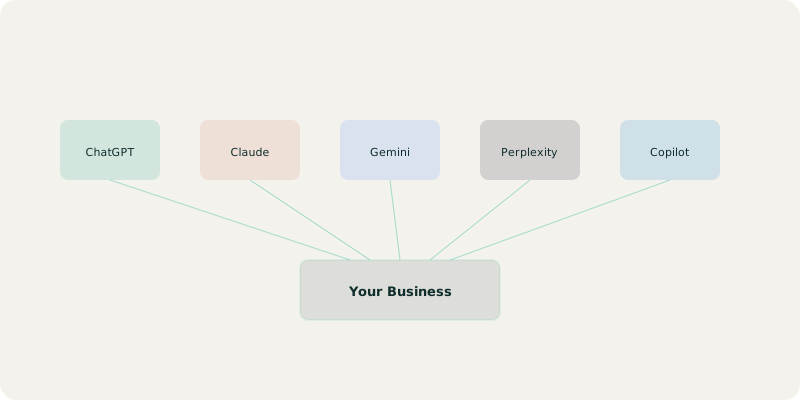
AI search is changing how customers find businesses. When someone asks ChatGPT, Claude, Gemini, Perplexity, Copilot or Google AI a question like this, the platform gives a direct answer. It does not show a list of links.
The business that AI understands and trusts gets named. The rest are invisible. In our testing of 1,400+ UK businesses, 77% are sending confusing signals to AI platforms.
Understanding questions like this one is the first step to making sure AI recommends your business, not your competitors. Get a free AI visibility audit to see where you stand.
Related
Adam Parker
AI Search Visibility Specialist
Adam is the founder of Rank4AI, specialising in AI search visibility. He helps businesses get found across ChatGPT, Gemini, Perplexity, and AI Overviews through technical optimisation and strategic content.
Last reviewed: Invalid Date