Guide
AI Search Visibility for Solicitors
Why Legal Firms Are Invisible to AI Search
Law firms that rank well on Google are regularly absent from AI search answers. In our UK testing, the legal sector scored zero on several key AI visibility signals. This represents a fundamental shift in how potential clients discover legal services.
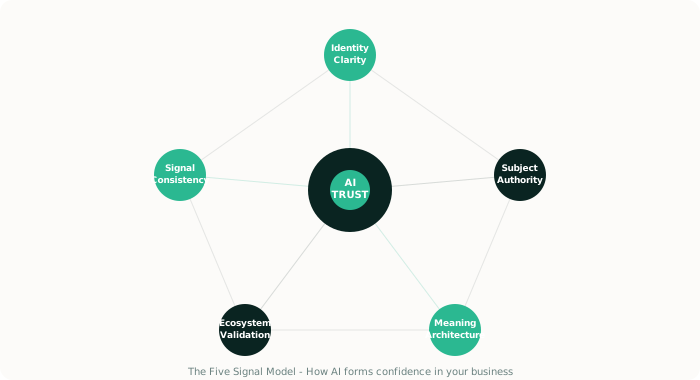
The reason: AI platforms evaluate trust differently from Google. They cross-reference the SRA register, directory listings, editorial mentions, and client reviews. A law firm that only exists on its own website has one voice. AI needs many.
Our Rank4AI data from 1,400+ UK businesses shows legal firms lag behind other sectors in AI visibility. While 34% of healthcare providers appear in AI answers, only 12% of law firms achieve the same presence. The gap widens when we examine premium search queries - those indicating high purchase intent.
The AI Trust Framework for Legal Services
AI systems prioritise authoritative sources when answering legal queries. They recognise that incorrect legal advice carries significant consequences. This creates a higher bar for trust signals than exists in other sectors.
Traditional SEO relies heavily on backlinks and keyword optimisation. AI search evaluates different factors entirely. It seeks consensus across multiple authoritative sources before recommending a legal provider. This explains why some Page 1 Google results disappear entirely from AI answers.
Consider this example: A personal injury firm ranks #3 on Google for "car accident lawyer Manchester." The same firm fails to appear in ChatGPT, Claude, or Perplexity results for identical queries. Why? The firm's authority exists primarily through paid links and aggressive SEO tactics. AI platforms discount these signals.
The Multi-Source Authority Problem
Law firms face a unique challenge in building multi-source authority. Legal advertising regulations restrict many promotional activities available to other sectors. Firms cannot simply buy their way to AI visibility through traditional marketing channels.
Successful legal AI optimisation requires a strategic approach to building genuine authority signals. This means earning mentions in legal publications, maintaining accurate directory listings, and generating authentic client testimonials. Each source reinforces the others in AI evaluation systems.
Our analysis reveals that firms appearing in AI results typically maintain presence across at least seven different authority sources. These include the SRA register, Chambers and Partners, Legal 500, local business directories, news publications, and verified review platforms.
Critical AI Visibility Signals for Law Firms
Regulatory Registration Consistency
AI platforms consistently reference the Solicitors Regulation Authority database when evaluating UK law firms. Firms with incomplete or inconsistent SRA listings face immediate credibility challenges. This basic requirement eliminates many potential AI recommendations before content quality even enters consideration.
Check your SRA listing accuracy monthly. Ensure all practicing solicitors appear correctly with current specialisations. AI systems flag discrepancies between website claims and regulatory records. A firm advertising "20 years of family law experience" while showing recent SRA admission dates triggers trust penalties.
Editorial Coverage and Media Mentions
Legal journalism provides crucial authority signals for AI platforms. Firms mentioned in Law Gazette, Legal Week, or local business publications gain significant credibility boosts. These mentions must be editorial, not advertorial. AI systems distinguish between paid placement and genuine coverage.
Building media relationships requires patience and expertise. Offer commentary on legal developments within your specialisation. Respond quickly to journalist requests for expert opinions. One quality quote in a national publication outweighs dozens of directory listings for AI authority purposes.
Professional Directory Presence
Chambers and Partners, Legal 500, and similar directories carry enormous weight in AI evaluations. These platforms conduct independent research and peer reviews. Their rankings reflect genuine professional standing rather than marketing spend.
Submit comprehensive directory applications annually. Provide detailed case studies and client references. Many firms skip these submissions, assuming Google visibility suffices. This represents a critical error in the AI search era.
Common Legal Sector AI Optimisation Mistakes
Over-Reliance on Website Content
Many law firms invest heavily in website content while ignoring external authority building. They publish extensive legal guides, case studies, and blog posts. This content rarely appears in AI search results without supporting authority signals from third-party sources.
Website content remains important for conversion once potential clients find your firm. However, discoverability in AI search requires external validation. Balance internal content creation with systematic authority building across multiple platforms.
Inconsistent Business Information
AI platforms cross-reference business information across dozens of sources. Inconsistent firm names, addresses, or contact details create confusion and reduce trust scores. A firm listed as "Smith & Associates" on their website but "Smith and Associates Ltd" in directories faces AI ranking penalties.
Audit all online listings quarterly. Create a master document with approved firm information and distribute it to all marketing team members. Consistency across every platform strengthens AI trust signals significantly.
Ignoring Client Review Management
Client reviews provide crucial social proof for AI systems. However, many law firms avoid review platforms due to confidentiality concerns or fear of negative feedback. This defensive approach costs valuable AI visibility opportunities.
Develop a systematic approach to review generation. Request feedback from satisfied clients through appropriate channels. Respond professionally to all reviews, both positive and negative. AI platforms evaluate response quality and consistency alongside review volume and ratings.
Building AI-Ready Legal Authority
The 90-Day Authority Building Plan
Sustainable AI visibility requires systematic authority building over time. Quick fixes and shortcuts typically backfire. AI systems detect artificial authority signals and penalise firms accordingly.
Start with regulatory compliance and directory listings. Ensure SRA records are complete and accurate. Submit applications to major legal directories with comprehensive supporting documentation. These foundational elements must be solid before advancing to media outreach and content marketing.
- Week 1-2: Audit and update all regulatory registrations
- Week 3-6: Complete major directory submissions
- Week 7-10: Launch systematic client review programme
- Week 11-12: Develop media outreach strategy and initial contact
Content Strategy for AI Discovery
AI-optimised legal content differs significantly from traditional SEO content. Focus on comprehensive answers to specific legal questions rather than keyword-heavy promotional material. AI systems favour authoritative explanations over marketing messages.
Create pillar content around your core practice areas. Each piece should thoroughly address a common legal concern. Support these with detailed case studies and practical examples. Link to relevant legislation and court decisions where appropriate.
Remember that AI platforms can access and analyse your entire website instantly. Ensure all content maintains consistent quality and authority. One poorly researched article can undermine the credibility of your entire site in AI evaluations.
Local Authority Building for Regional Firms
Regional law firms face additional challenges in building AI authority. They compete against national firms with larger marketing budgets and established media relationships. However, local authority signals can provide significant advantages in geographically-specific searches.
Engage actively with local business communities and legal societies. Speak at chamber of commerce events and professional development sessions. Contribute to local business publications and community newsletters. These activities build the diverse authority signals AI platforms value.
Measuring AI Visibility Progress
Key Metrics to Track
Traditional legal marketing metrics provide incomplete pictures of AI visibility progress. Website traffic and search rankings remain important but don't capture AI search performance. Develop new measurement approaches for the AI era.
| Metric | Frequency | Target |
|---|---|---|
| AI search appearances | Weekly | Top 3 results for core queries |
| Directory listing accuracy | Monthly | 100% consistency across platforms |
| Media mentions | Quarterly | Minimum 2 editorial mentions |
| Review generation | Monthly | 5+ new verified reviews |
Tools and Testing Methods
Monitor AI search results across multiple platforms regularly. ChatGPT, Claude, Perplexity, and Bing Chat each use different algorithms and source prioritisation. A firm might rank well on one platform while remaining invisible on others.
Test variations of your core search queries monthly. Include location-specific terms, practice area combinations, and question-based searches. AI platforms respond differently to "divorce lawyer Birmingham" versus "How do I find a good divorce solicitor in Birmingham?"
The Future of Legal AI Search
AI search adoption accelerates rapidly across all demographics. Legal consumers increasingly begin research with AI platforms rather than traditional search engines. Law firms that ignore this shift risk losing significant market share to more AI-visible competitors.
Regulatory bodies will likely develop specific guidelines for AI search optimisation in legal marketing. Firms should build authority through legitimate, ethical methods now rather than scrambling to comply with future regulations.
The investment required for AI visibility may seem substantial initially. However, early adopters gain significant competitive advantages. As more firms recognise AI search importance, building authority becomes increasingly difficult and expensive.
Key Takeaways
- Multi-source authority is essential: AI platforms require validation from multiple independent sources, not just your website
- Regulatory compliance comes first: Ensure SRA registrations are complete and accurate before pursuing other authority signals
- Editorial coverage outweighs advertising: One genuine media mention provides more AI authority than dozens of paid directory listings
- Consistency matters everywhere: Maintain identical business information across all platforms to avoid AI trust penalties
- Local authority builds competitive advantage: Regional firms can compete effectively through focused local engagement and community involvement
- Traditional metrics miss AI performance: Develop new measurement approaches that capture AI search visibility specifically
For the full sector analysis, see our solicitors sector page. For the methodology behind our testing, see our methodology. Ready to assess your firm's AI visibility? Start with our free audit to identify immediate improvement opportunities.
Adam Parker
Founder, Rank4AI
Adam is the founder of Rank4AI, specialising in AI search visibility. He helps businesses get found across ChatGPT, Gemini, Perplexity, and AI Overviews through technical optimisation and strategic content.
Last reviewed: 23 May 2026