Guide
AI Search ROI: The Business Case
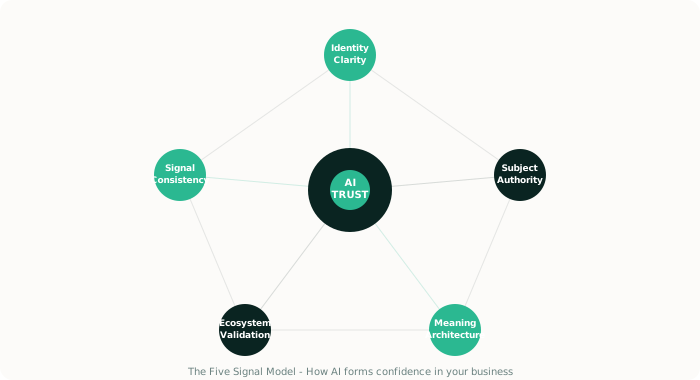
AI search visibility is infrastructure, not a campaign. Unlike paid advertising, it does not stop when the budget stops. The position built in month two is the foundation for month six.
This fundamental shift changes how we think about digital marketing investment. Traditional campaigns have clear start and end dates. AI visibility builds like compound interest. Each optimisation strengthens the next.
From our analysis of 1,400+ UK businesses, companies that treat AI search as infrastructure see sustained growth. Those treating it as a short-term tactic plateau quickly.
The Measurement Gap
When an AI system recommends your business, the user often gets what they need, your name, what you do, a reason to consider you, without clicking through to your site. Your analytics record nothing. Your brand was surfaced, your expertise referenced, someone made a decision based on what the AI said about you. And your dashboard shows zero.
This creates a significant blind spot for most businesses. Traditional metrics miss the full impact of AI recommendations. A user might see your company mentioned by ChatGPT, research you elsewhere, then contact you directly.
Consider this scenario: Someone asks ChatGPT for "sustainable packaging suppliers in Manchester". The AI mentions three companies, including yours. The user notes your name, searches for you on LinkedIn, reads your company page, then calls your office number directly.
Your website analytics show nothing. Your AI mention generated a lead, but you cannot connect the dots. This is the measurement gap.
Brand search volume and direct traffic are better proxies than session data for measuring AI search impact. Monitor these metrics alongside traditional analytics for a complete picture.
Alternative Measurement Approaches
Smart businesses track AI visibility through multiple channels:
- Brand search volume increases across Google, Bing, and social platforms
- Direct traffic spikes following AI platform updates
- Inbound enquiries mentioning AI research as the source
- Social media mentions and shares without referral traffic
- Phone enquiries that cannot be attributed to other channels
When a business starts being named in AI answers, branded search often follows as people look it up directly. This signal tends to appear weeks before traditional traffic increases, which makes branded search volume a useful early indicator to watch.
The Compounding Effect
AI visibility compounds. Each month of consistent signals makes the position more stable. Build now while competitors are not thinking about it. Once AI confidence is established, it is very hard to displace.
This compounding effect works through multiple mechanisms. AI systems learn from patterns across vast datasets. When your business appears consistently in quality contexts, the algorithms build confidence in your relevance.
We engineer deliberately what established brands accumulated passively. The mechanism is the same. The timeline is different.
How Compounding Works in Practice
Take a Manchester law firm specialising in employment law. Month one: they optimise their website content for AI crawlers. Month two: they publish detailed guides on employment issues. Month three: industry publications cite their expertise.
By month four, AI systems have multiple signals. The firm appears in website content, published articles, and third-party references. Each signal reinforces the others. The AI gains confidence in recommending this firm for employment law queries.
Month six brings a new competitor with a flashy website and expensive content. But the established firm has months of compounded signals. The AI trusts the established pattern. The competitor needs significant time and effort to build equivalent authority.
The Network Effect
AI systems cross-reference information across platforms. Your LinkedIn presence supports your website content. Industry mentions reinforce your expertise claims. Social media activity demonstrates ongoing relevance.
This creates a network effect where each optimised touchpoint strengthens the others. In our experience, businesses with a coordinated multi-platform presence build a clearer, more consistent picture for AI to draw on than those relying on a single platform.
Building Defensible Positions
Strong AI positions become increasingly defensible over time. This defensive strength comes from multiple factors working together.
Signal Depth and Consistency
AI systems value consistency over time. A business mentioned sporadically carries less weight than one with steady, quality signals. Regular content publication, consistent messaging, and ongoing industry engagement build this consistency.
Our audits reveal businesses with 12+ months of consistent AI optimisation enjoy significantly more stable positions. Short-term efforts create temporary visibility. Long-term consistency creates lasting authority.
Authority Accumulation
Authority in AI search works similarly to traditional SEO but with important differences. Traditional SEO focuses heavily on backlinks. AI search values content depth, expertise demonstration, and cross-platform coherence.
A business becomes an authority when AI systems consistently find detailed, accurate information about their expertise across multiple sources. This takes time to establish but creates powerful competitive moats once achieved.
Timeline and Expectations
Understanding the typical development timeline helps set realistic expectations and plan resources effectively.
| Phase | Timeframe | Key Activities | Expected Outcomes |
|---|---|---|---|
| Foundation | Months 1-2 | AI crawlers have access. Priority pages restructured. Ecosystem live. | Technical foundations in place. Initial AI indexing begins. |
| Expansion | Months 2-4 | Content across key clusters. Extended ecosystem. All six platforms showing coverage. | Broader topic coverage. Multiple platform presence established. |
| Maturation | Months 4-8 | Full site and content to standard. Full ecosystem active. | Comprehensive coverage. Strong positions in core topics. |
| Dominance | 8+ months | Self-reinforcing. Very difficult for competitors to displace quickly. | Market-leading AI visibility. Defensive competitive position. |
Month-by-Month Breakdown
Months 1-2: Foundation Phase
The foundation phase focuses on technical preparation and initial content optimisation. This includes ensuring AI crawlers can access your content, restructuring key pages for AI comprehension, and establishing basic presence across relevant platforms.
Example: A software consultancy removes crawler blocks, rewrites their services pages with clear expertise statements, and creates detailed team profiles highlighting specific technical skills.
Months 2-4: Expansion Phase
Expansion builds comprehensive content coverage across your topic clusters. This phase requires significant content creation and ecosystem development. Quality matters more than quantity.
The same software consultancy might publish detailed guides on cloud migration, contribute expert commentary to industry publications, and establish thought leadership through speaking engagements.
Months 4-8: Maturation Phase
Maturation brings everything to professional standard. Full website optimisation, comprehensive content library, and active ecosystem engagement. This phase typically shows strongest visibility gains.
8+ Months: Dominance Phase
The dominance phase represents self-reinforcing authority. Your established position makes further growth easier while making competitor displacement much harder. Maintenance becomes more important than aggressive expansion.
Investment vs Returns
AI search optimisation requires front-loaded investment for back-loaded returns. This differs significantly from paid advertising's immediate but temporary results.
Month one and two require substantial content creation and technical work. Months four through eight show accelerating returns. Month twelve and beyond deliver compounding benefits from earlier investments.
Businesses often struggle with this delayed gratification model. However, in our experience companies that maintain consistent AI optimisation for 12+ months build a far more durable presence than those with sporadic efforts, because the signals compound over time.
Resource Planning
Effective AI search programs require sustained resource allocation. Plan for higher initial investment followed by steady maintenance spending. This differs from traditional marketing's campaign-based budgeting.
Smart businesses allocate 60% of their AI search budget to the first six months, then maintain steady investment for ongoing optimisation and content development.
Common Timeline Mistakes
Several timeline mistakes consistently undermine AI search success:
- Expecting immediate results like paid advertising campaigns
- Reducing investment after initial setup phase
- Focusing on single platforms instead of ecosystem approach
- Neglecting ongoing content development and optimisation
- Measuring success using traditional traffic metrics only
The most successful businesses treat AI search like building a factory, not running a promotion. Initial construction takes time and resources, but the facility produces value for years once operational.
Getting Started
Beginning an AI search program requires understanding your current position and market opportunities. Professional auditing reveals gaps and priorities that might not be obvious from internal perspectives.
Our free audit process examines your current AI visibility across major platforms and identifies immediate improvement opportunities. This baseline assessment helps set realistic timelines and resource requirements for your specific situation.
Key Takeaways
- Infrastructure thinking: AI search builds lasting assets, not temporary campaign results
- Measurement evolution: Traditional analytics miss significant AI-driven brand discovery and consideration
- Compounding returns: Early consistent effort creates increasingly defensible competitive positions
- Timeline reality: Significant results typically emerge after 4-6 months of sustained optimisation
- Investment pattern: Front-loaded resource allocation delivers back-loaded returns and long-term benefits
- Ecosystem approach: Multi-platform consistency drives better results than single-channel optimisation
- First-mover advantage: Early adoption creates competitive moats that become harder to breach over time
Adam Parker
Founder, Rank4AI
Adam is the founder of Rank4AI, specialising in AI search visibility. He helps businesses get found across ChatGPT, Gemini, Perplexity, and AI Overviews through technical optimisation and strategic content.
Last reviewed: 27 May 2026