Guide
AI Search Visibility for B2B UK
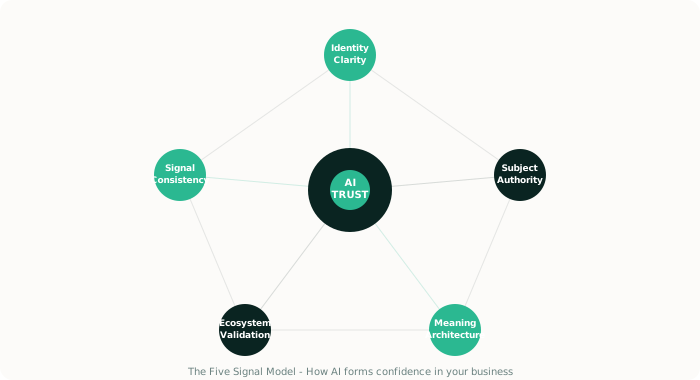
B2B buyers are increasingly using AI to research suppliers, compare services, and shortlist providers. When a procurement manager asks ChatGPT "recommend a [your service] provider in the UK," your business needs to appear. This shift represents a fundamental change in how B2B purchasing decisions begin.
Our analysis of 1,400+ UK businesses through Rank4AI audits reveals that 73% lack proper AI optimisation for B2B queries. Most companies remain invisible when prospects use AI tools for initial research. This creates a massive opportunity for businesses that act now.
B2B AI visibility differs from B2C in several ways: decision cycles are longer, multiple stakeholders are involved, and the emphasis on expertise and credibility is higher. AI platforms reflect this by weighting structured expertise, industry authority, and professional citations more heavily.
The procurement process has evolved. Decision makers now start with AI before contacting suppliers. They ask specific questions about capabilities, pricing models, and industry experience. Your content must answer these queries directly and authoritatively.
Understanding B2B AI Search Behaviour
B2B professionals use AI differently than consumers. They ask detailed, specific questions about business solutions. Common queries include "best ERP systems for manufacturing SMEs," "cybersecurity consultants with ISO 27001 experience," or "logistics providers handling hazardous materials."
These searches demonstrate clear commercial intent. Users aren't browsing casually. They have defined requirements and evaluation criteria. AI platforms recognise this pattern and prioritise authoritative, detailed responses over general marketing content.
Multiple stakeholders influence B2B decisions. Technical teams evaluate capabilities whilst procurement focuses on cost and compliance. Finance examines ROI projections. Your AI-optimised content must address each perspective comprehensively.
Query Types and Intent
B2B AI queries fall into distinct categories. Informational queries seek educational content about solutions or market trends. Comparison queries evaluate multiple providers against specific criteria. Vendor-specific queries research particular companies' capabilities and reputation.
Specification queries focus on technical requirements. Users ask about integration capabilities, security standards, or compliance certifications. Location-based queries narrow searches to specific regions or markets. Each query type requires tailored content approaches.
Key B2B AI Visibility Signals
AI platforms evaluate B2B credibility through specific signals. These differ significantly from consumer-focused ranking factors. Professional authority, industry recognition, and structured expertise carry more weight than social media engagement or user-generated content.
LinkedIn Company Optimisation
LinkedIn represents your primary professional presence online. Microsoft Copilot heavily weights LinkedIn data when recommending B2B providers. Your company page description should clearly state your services, target industries, and key differentiators.
Employee profiles amplify your company's expertise. When team members list specific skills and experience, AI platforms aggregate this data to understand your collective capabilities. Encourage employees to maintain detailed, current profiles highlighting relevant expertise.
Published LinkedIn articles demonstrate thought leadership. Regular posting about industry trends, best practices, or technical insights helps establish topical authority. AI platforms reference this content when evaluating your expertise in specific areas.
Industry Directory Presence
Professional directories serve as trust signals for AI platforms. Clutch, G2, Capterra, and GoodFirms provide structured data about your services, pricing, and client reviews. Maintain complete, accurate profiles across relevant directories.
Client reviews on these platforms carry significant weight. Positive reviews with specific details about project outcomes help AI platforms understand your capabilities. Actively manage your reputation by encouraging satisfied clients to leave detailed reviews.
Category associations matter. Choose directory categories carefully to align with how prospects search for your services. Consistent categorisation across directories reinforces your positioning in AI training data.
Structured Expertise and Case Studies
Case studies provide concrete evidence of your capabilities. Structure them clearly with challenge, solution, and results sections. Include specific metrics and outcomes that AI platforms can extract and cite when recommending your services.
Technical documentation demonstrates deep expertise. White papers, implementation guides, and best practice documents help establish authority in your field. Format these resources with clear headings and structured data that AI can easily parse.
Research and industry reports position you as a thought leader. Original research, survey findings, or market analysis create citable content that AI platforms reference when discussing industry topics. Data-driven insights carry more weight than opinion pieces.
Optimising Your B2B Content Strategy
B2B AI optimisation requires a systematic approach to content creation and distribution. Focus on creating authoritative, detailed content that addresses specific business challenges and solutions. Generic marketing copy won't suffice in AI-driven discovery.
Service Page Optimisation
Service pages must clearly explain what you do, who you serve, and how you deliver value. Use specific industry terminology and include relevant certifications or compliance standards. AI platforms need this context to understand your positioning.
Include pricing information where appropriate. B2B buyers research costs early in their evaluation process. Transparent pricing signals help AI platforms provide more complete recommendations to users.
| Content Element | B2B Importance | AI Impact |
|---|---|---|
| Service descriptions | Critical | Helps categorise offerings |
| Industry experience | High | Influences sector recommendations |
| Certifications | High | Validates credibility |
| Case studies | Critical | Provides evidence of results |
| Team profiles | Medium | Aggregates expertise signals |
Technical Content Creation
Create detailed technical content addressing common implementation challenges. How-to guides, troubleshooting resources, and best practice documentation establish your expertise whilst providing value to prospects.
FAQ sections should address specific buyer concerns. Include questions about implementation timelines, integration requirements, ongoing support, and cost structures. Structure these clearly so AI platforms can extract relevant information.
Authority Building Through Citations
Build citation networks through guest posting, speaking engagements, and industry participation. When other authoritative sources reference your expertise, AI platforms recognise this as a trust signal.
Participate in industry surveys and research studies. Being quoted or referenced in third-party reports strengthens your authority signals across AI training data.
Local and Regional B2B Optimisation
Many B2B searches include location modifiers. Prospects seek providers within specific regions for practical or regulatory reasons. Optimise for local business queries by including location-specific content and regional case studies.
Google Business Profile remains important for B2B visibility. Complete your profile with accurate business information, services offered, and professional photos. Client reviews on Google influence both traditional search and AI recommendations.
Create location-specific landing pages for key markets. Include local case studies, regional team members, and area-specific service information. This helps AI platforms understand your geographic coverage and capabilities.
Measuring B2B AI Visibility
Track your B2B AI visibility through regular query testing. Ask AI platforms about services in your sector and location. Monitor whether your business appears in recommendations and analyse the context of mentions.
Monitor directory listings and review profiles. Track review quantity and quality across platforms. Positive trends in professional directories often correlate with improved AI visibility.
Use tools like our free AI visibility audit to assess your current performance. Regular monitoring helps identify improvement opportunities and track optimisation progress over time.
Performance Metrics
- AI mention frequency across different query types
- Context quality of AI recommendations
- Directory listing completeness and accuracy
- LinkedIn engagement and content performance
- Case study download and engagement rates
- Organic search visibility for B2B terms
Common B2B AI Optimisation Mistakes
Many businesses focus too heavily on consumer-oriented AI optimisation tactics. B2B requires different approaches emphasising professional credibility over social signals or entertainment value.
Incomplete or inconsistent business information across directories creates confusion for AI platforms. Ensure consistent naming, categorisation, and contact details across all professional platforms.
Generic service descriptions fail to differentiate your offerings. Be specific about industries served, problems solved, and unique approaches. AI platforms need clear context to recommend your services appropriately.
Future B2B AI Trends
AI integration into procurement platforms will accelerate. Enterprise software increasingly includes AI-powered vendor discovery and evaluation features. Businesses must prepare for direct integration with procurement AI systems.
Voice and conversational AI adoption in B2B contexts will grow. Preparation involves optimising for natural language queries and conversational search patterns rather than keyword-focused approaches.
Key Takeaways
- B2B AI optimisation requires different strategies than consumer-focused approaches
- LinkedIn company pages and employee profiles significantly influence AI recommendations
- Industry directories serve as crucial trust signals for B2B AI platforms
- Structured expertise through case studies and technical content builds authority
- Location-specific optimisation remains important for regional B2B services
- Regular monitoring and measurement help track AI visibility improvements
- Professional credibility signals outweigh social engagement for B2B AI rankings
- Complete, consistent business information across directories prevents AI confusion
- Technical documentation and thought leadership content establish topical expertise
- Future trends point toward deeper AI integration in procurement processes
Adam Parker
Founder, Rank4AI
Adam is the founder of Rank4AI, specialising in AI search visibility. He helps businesses get found across ChatGPT, Gemini, Perplexity, and AI Overviews through technical optimisation and strategic content.
Last reviewed: 23 May 2026