Guide
Google AI Mode Optimisation
Google AI Mode represents a fundamental shift in how search will work. This new AI-powered feature, driven by Gemini 2.5, creates a completely different search experience. When users activate AI Mode, they see only one AI-generated response. Traditional organic results disappear entirely.
This marks a departure from AI Overviews, which appear above standard search results. AI Mode eliminates the traditional results page altogether. Users get one comprehensive answer instead of multiple links to explore.
The implications for UK businesses are significant. Companies that have relied on traditional SEO rankings face a new challenge. Success now depends on being selected by AI, not just ranking highly in organic results.
How Google AI Mode Works
Google AI Mode processes queries differently from traditional search. The system analyses the user's question and determines the best response format. It then draws from multiple sources to create one authoritative answer.
For local business queries, AI Mode identifies relevant service providers in the area. It evaluates these businesses based on several factors. The AI then recommends the most suitable options within its response.
Consider a query like "best marketing agency in Manchester". Traditional search would show multiple website listings, directories, and review sites. AI Mode provides one response recommending specific agencies with explanations.
The AI evaluates factors like business credibility, expertise demonstration, and consistent information across sources. Companies with strong, coherent digital footprints perform better in this environment.
What AI Mode Means for UK Businesses
When someone uses AI Mode to find a service provider, the AI builds a single answer from multiple sources. The businesses it recommends are the ones it understands clearly, trusts consistently, and can confidently cite.
This creates a winner-takes-most scenario. Instead of competing for position one through ten, businesses now compete for inclusion in one AI response. Getting recommended becomes more valuable than traditional rankings.
Our analysis of 1,400+ UK businesses shows a clear pattern. Companies with fragmented online presence struggle with AI recommendation systems. Those with cohesive, authoritative digital footprints consistently appear in AI responses.
Take two competing accountancy firms in Birmingham. Firm A has a basic website, minimal online presence, and inconsistent business information. Firm B maintains detailed service pages, regular content publication, and consistent NAP data across platforms.
When AI Mode processes "accountant Birmingham", Firm B appears in the recommendation. The AI can clearly understand their services, verify their legitimacy, and cite specific expertise. Firm A remains invisible.
The Five Signal Model
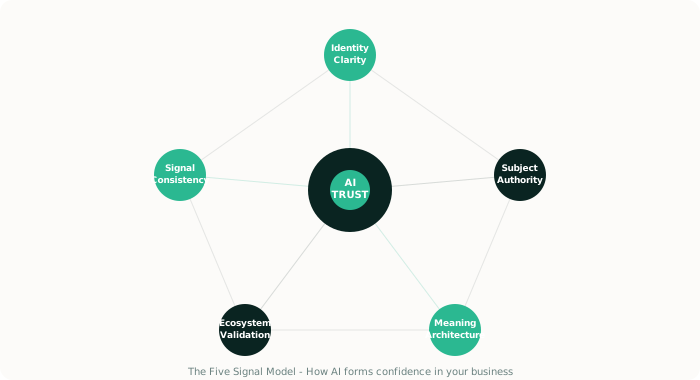
This follows the same Five Signal Model that applies across all AI platforms. Identity Clarity, Subject Authority, Meaning Architecture, Ecosystem Validation and Signal Consistency.
Identity Clarity means AI can easily identify your business. This includes consistent business names, addresses, and contact information across all platforms. Inconsistencies confuse AI systems and reduce recommendation chances.
Subject Authority demonstrates your expertise in specific areas. AI systems look for detailed, helpful content that shows knowledge. Generic content provides little authority signal.
Meaning Architecture structures your information clearly. AI needs to understand what you do, where you operate, and who you serve. Poor website structure hampers AI comprehension.
Ecosystem Validation comes from external sources confirming your business legitimacy. This includes directory listings, review sites, and industry mentions. AI systems cross-reference multiple sources.
Signal Consistency ensures all your information aligns across platforms. Conflicting details about services, locations, or expertise damage AI trust signals.
Current Rollout and Availability
Google AI Mode currently operates in limited testing phases. Early access users can activate the feature through Google Search Labs. The rollout follows Google's typical pattern of gradual expansion.
Initial testing focuses on specific query types and user segments. Google monitors performance and user engagement before broader releases. UK availability follows US testing phases.
Business owners should expect wider availability throughout 2024. Early preparation provides competitive advantages when AI Mode becomes standard. Companies starting optimisation now gain head starts over competitors.
Preparing Your Business for AI Mode
The businesses that will appear in AI Mode are the ones building AI search visibility now. The same work that gets you recommended by ChatGPT and Perplexity will get you recommended by Google AI Mode.
Start with Identity Clarity across all platforms. Ensure your business name, address, and phone number match exactly everywhere. Check Google My Business, industry directories, and social media profiles.
A comprehensive AI visibility audit reveals inconsistencies across your digital presence. These audits identify gaps that prevent AI systems from understanding your business clearly.
Content Strategy for AI Mode
Create detailed service pages that explain your offerings comprehensively. AI systems favour specific, helpful content over generic descriptions. Include location details, process explanations, and expertise demonstrations.
For example, instead of "We provide marketing services", write "We provide Google Ads management, SEO optimisation, and social media marketing for Manchester-based SMEs. Our process includes initial strategy development, campaign implementation, and monthly performance reporting."
Develop FAQ sections addressing common customer questions. AI systems often pull from FAQ content when generating responses. Structure answers clearly with specific, actionable information.
Regular content publication demonstrates ongoing expertise. Blog posts, case studies, and industry insights show AI systems you remain active and knowledgeable. Consistency matters more than frequency.
Technical Optimisation Requirements
Implement structured data markup across your website. Schema.org markup helps AI systems understand your business information, services, and locations. Focus on Local Business, Service and Organisation schema, and pair it with clear question and answer content on the page itself.
Optimise page loading speeds and mobile responsiveness. AI systems consider user experience signals when evaluating businesses. Poor technical performance reduces recommendation likelihood.
Create clear internal linking structures. Help AI systems navigate your content by connecting related pages logically. Use descriptive anchor text that explains page content.
Building Ecosystem Validation
Claim and optimise profiles on relevant industry directories. Ensure consistent information across all platforms. Focus on authoritative directories in your sector rather than generic listing sites.
Encourage genuine customer reviews across multiple platforms. AI systems use review sentiment and quantity as trust signals. Respond professionally to all reviews, positive and negative.
Build relationships with industry publications and local media. Mentions and links from authoritative sources strengthen your validation signals significantly.
Measuring AI Mode Performance
Track your business mentions across AI platforms. Monitor ChatGPT, Perplexity, and other AI systems for recommendation frequency. Consistent mentions indicate strong AI visibility signals.
Monitor traditional analytics for changes in traffic patterns. As AI Mode adoption increases, direct website visits may decline while qualified leads increase. Focus on conversion quality over quantity.
Survey new customers about their discovery methods. Understanding how customers find you helps identify which AI optimisation efforts produce results.
| Metric | Traditional Search | AI Mode Impact |
|---|---|---|
| Traffic Volume | Higher total visits | Lower but higher quality |
| Conversion Rate | Variable quality | Better qualified leads |
| Brand Recognition | Depends on rankings | Enhanced through AI recommendation |
Common Preparation Mistakes
Many businesses focus solely on traditional SEO tactics. Keyword stuffing and link building provide limited value for AI recommendation systems. AI evaluates content quality and business legitimacy differently.
Others create content without considering AI comprehension. Human readers and AI systems process information differently. Content must serve both audiences effectively.
Neglecting consistency across platforms undermines AI trust signals. Small discrepancies in business information create confusion. Regular audits prevent these issues from developing.
Future Implications
AI Mode represents the future direction of search technology. Similar features will likely appear across other search platforms. Early preparation provides sustainable competitive advantages.
Build the connected digital presence. Make sure AI can find, understand and trust your business from multiple independent sources. That is the baseline for every AI platform, including AI Mode.
The businesses adapting now will dominate AI-driven search results. Those waiting risk becoming invisible as user behaviour shifts toward AI-powered search experiences.
Key Takeaways
- Google AI Mode replaces traditional search results with single AI-generated responses
- Success depends on the Five Signal Model: Identity Clarity, Subject Authority, Meaning Architecture, Ecosystem Validation, and Signal Consistency
- Businesses must build comprehensive, consistent digital presence across multiple platforms
- Content should be detailed, helpful, and structured for both human readers and AI comprehension
- Early preparation provides competitive advantages as AI Mode adoption increases
- Focus on quality signals rather than traditional SEO tactics for AI recommendation systems
Check your AI Mode readiness
Get a Free AI Search Visibility Audit →Adam Parker
Founder, Rank4AI
Adam is the founder of Rank4AI, specialising in AI search visibility. He helps businesses get found across ChatGPT, Gemini, Perplexity, and AI Overviews through technical optimisation and strategic content.
Last reviewed: 27 May 2026